Nepal's Digital Crackdown: A Deep Analysis of the Most Controversial Social Media Ban in South Asia
Nepal blocked 26 platforms on September 4, 2025. Protests killed 19, toppled a prime minister, and carried a rapper to power in the March 2026 election.
Updated October 6, 2026 - World Bank October 2026 Nepal Development Update added; Aug. 2026 Rasuwa flood impact added; Oli’s March 2026 arrest and the Shah government’s 100-day review included.
7 days. That is all 26 global platforms got to obey a brand-new rulebook in a country of 30 million people. What followed was the deadliest week in Nepal’s recent street history, a burned parliament, and eventually a rapper in the prime minister’s chair.
The story in 30 seconds
- On Sept. 4, 2025 Nepal blocked 26 social platforms for missing a registration deadline
- The order followed an Aug. 17 court ruling and a 7-day notice issued on Aug. 28
- Protests led by young people began on Sept. 8; police fired on crowds - 19 dead on day 1, 77 dead in total, hundreds wounded, some estimates near 400
- The government lifted the ban on Sept. 9; Prime Minister K.P. Sharma Oli resigned; protesters torched parliament; the army deployed under curfew
- Former Chief Justice Sushila Karki became interim leader on Sept. 12; TikTok and Viber stayed online because they had registered
- Parliament dissolved; the Social Media Bill 2081 withdrawn in Feb. 2026; new parliament elected on March 5, 2026; Balendra Shah sworn in as prime minister on March 27, 2026; Oli arrested on March 28, 2026
The court order behind the ban
On Aug. 17, 2025, the Kathmandu Post and other Nepali press published the full text of a Supreme Court ruling on social platforms. The bench was an extended full bench led by then Chief Justice Bishowambhar Prasad Shrestha. It said all platforms must register in Nepal and accept monitoring to curb misinformation and fake identities.
The full text came from a Sept. 29, 2024 verdict in a contempt case against sidhakura.com, a Kathmandu news site and YouTube channel. The court released it on Aug. 16, 2025. Press reports carried it on Aug. 17.
The government treated the ruling as a direct order to enforce. Rights groups said the wording was broad. They said it gave officials wide power to decide what counts as false or harmful.
A 7-day deadline
On Aug. 25, the cabinet approved enforcement. On Aug. 28, the Ministry of Communications and Information Technology issued a public notice. Platforms had 7 days to register. The deadline was Sept. 3.
Critics said 7 days was too short for large foreign firms. They said it required local offices, local staff, legal filings in Nepali and video identity checks. The government said firms had received ample time and repeated requests.
What registration required
The 2023 directives on social-network use set the base rules under the Electronic Transaction Act 2008. That act is Nepal’s main law on digital deals and cybercrime. Under the 2025 drive, a platform had to register with the ministry, open a local liaison office, name a resident grievance officer, and name a compliance monitoring officer.
Foreign firms faced added steps. They had to file company certificates, tax and VAT papers, privacy policies, and grievance systems. Some papers needed notary approval and Nepali translation. A license was to last 3 years with renewal.
Which platforms went dark
The Nepal Telecommunications Authority listed 26 services. The list covered large networks such as Facebook, Instagram, X, LinkedIn, Reddit, Threads and Mastodon. It covered chat apps such as WhatsApp, Facebook Messenger, Discord, Signal, WeChat, Line, IMO, Zalo and Soul. It also covered YouTube, Pinterest, Tumblr, Snapchat, Clubhouse, Rumble, Quora, VK, Hamro Patro, Mi Video and Mi Vike.
5 services stayed online. TikTok, Viber, Wetalk, Nimbuzz and Poppo Live had registered. TikTok had registered in Nov. 2024 after an earlier ban. Telegram and Global Diary were listed as in process and were not blocked at first.
By the numbers: what the ban cost
| Measure | Figure | Source |
|---|---|---|
| Platforms blocked | 26 of 30+ | Nepal Telecommunications Authority |
| Platforms that stayed online | 5 (TikTok, Viber, Wetalk, Nimbuzz, Poppo Live) | NTA |
| Dead on day 1 (Sept. 8-9) | 19 | Al Jazeera |
| Total dead in unrest | 77 | Officials & press, Mar. 2026 |
| Injured | 100+ (estimates near 400) | Hospitals |
| Small sellers hit | 50,000+ (up to 50% sales drop) | Press reports |
| Economic damage | ~$586 million | Reuters / France24 |
| Prime minister | Oli (out) to Balendra Shah (Mar. 27, 2026) | Reuters / Kathmandu Post |
Timeline from Sept. 3 to Sept. 10
Sept. 3 passed with almost no large platform fully registered. On Sept. 4, the ministry asked the authority to block the 26 services. Internet providers began DNS blocks the same day.
From Sept. 4 to Sept. 7, users found apps dead. Shops lost contact with buyers. Families lost video links. Offices lost work chats.
On Sept. 8, large youth protests reached Kathmandu and other cities. Police used tear gas, water cannon, batons, rubber bullets and live rounds. Hospitals reported gunshot wounds. Al Jazeera reported 17 dead in Kathmandu and 2 in Itahari on Sept. 9, with more than 100 injured and some estimates near 400 including police.
On Sept. 9, the government lifted the ban. Oli resigned. Protesters set fire to Singha Durbar and the parliament building. The Supreme Court building, the president’s residence and homes of top leaders were attacked. Airports were occupied and flights were grounded. Media houses were attacked.
On Sept. 10, Army Chief General Ashok Raj Sigdel said the Nepali Army had taken full control to restore order. Curfews stayed in force in Kathmandu, Pokhara and Butwal. A mass youth meeting backed former Chief Justice Sushila Karki as interim leader. She accepted and said she would honor the dead and back free elections.
How the government explained the move
Communications Minister Prithvi Subba Gurung said platforms had ample time and ignored repeated requests, so the state ended their operations in Nepal. The stated aims were to limit misinformation, fraud and identity theft, to collect tax from foreign firms, to give users a local point for complaints, and to protect sovereignty, social harmony and public order.
“The platforms were given ample time to register and repeated requests were made for compliance, but they disregarded this.” Communications Minister Prithvi Subba Gurung, as reported by Nepali press
Supporters of the ban said local presence helps law enforcement. Critics said the same goals could be met with longer timelines, clear rules and court oversight.
How platforms responded
Within 24 hours, only 2 services contacted the ministry in full. Hamro Patro filed a full application with papers. X sent an email from its Singapore office asking for the paper list. Meta spoke to officials on day 1 about respect for local law and then filed no formal letter in that period.
Analysts said Nepal’s market of about 30 million people is small for global ad income. They said firms feared that a costly local-office model in Nepal would be demanded by many other states. That cost and precedent shaped the slow response.
The Sept. 8 protests
Thousands of school and college students joined the Sept. 8 marches. Many cited graft, weak job prospects and anger over online posts that showed children of elites living in luxury. Average income near 1,300 dollars a year made those images sting.
Police action turned the march violent. Early counts on Sept. 8 and Sept. 9 put deaths at 19. More than 100 people were hurt, with some counts near 400. Later tallies rose as hospitals and rights teams checked records. By March 2026, officials and press cited 77 dead for the whole period of unrest, including deaths on Sept. 9 and after.
Fires, resignations and army deployment
On Sept. 9, crowds burned the parliament complex at Singha Durbar. Fire also hit state offices and private homes. The house of former Prime Minister Jhalanath Khanal was burned. Reports said his wife Rajyalaxmi Chitrakar died in that fire. The claim spread widely and remained hard to verify in full.
Foreign Minister Arzu Rana Deuba was attacked by a mob. Videos showed assaults on leaders. Reports said the finance minister was stripped and chased. Details varied across clips. Army helicopters moved some officials to safety.
Oli resigned within hours of the ban reversal. He had called platforms above the law for skipping registration. Ministers had already quit. Oli left office as streets filled with smoke. The army then moved to guard roads, airports and burned sites.
Rumors filled the gap. Some named rapper-turned-Kathmandu-mayor Balendra Shah as a youth favorite. Some named economist Sumana Shrestha. Some claimed President Ram Chandra Poudel had quit. Some raised fears of a royal return. India and China watched closely. Prime Minister Narendra Modi called for calm and held a security review. The UN offered help.
The ban is lifted
Minister Gurung announced early on Sept. 9 that the block on all 26 platforms was gone. He told Reuters, “We have withdrawn the shutdown.” The cabinet met at Oli’s residence and backed the reversal. Providers began to unblock DNS that evening. Full access returned in stages.
The lift came with no registration. Meta, X and others did not complete ministry listing that week. Press reports said the registration drive was closed for the near term. One unconfirmed report said X might still face limits linked to its stance on graft and transparency, but general access was restored.
An interim leader steps in
On Sept. 10, youth groups in a mass meet picked Sushila Karki. She is a former chief justice seen as neutral and clean. On Sept. 12, President Poudel dissolved the House of Representatives and swore her in as interim prime minister. She became the 1st woman to lead Nepal’s government.
Her mandate was narrow. She was to calm the streets, probe killings and graft cases, and hold a fresh federal vote within 6 months. She named a cabinet with many technocrats and civil society faces. The army kept order while police and election staff rebuilt burned records and offices. The election date was set for March 5, 2026 for the 275-seat lower house. Provincial assemblies were not dissolved, so the snap vote covered only the federal house.
Economic costs
Creators lost income at once. Channels such as Herne Katha with more than 1.6 million subscribers could not post. Music labels such as Music Nepal and OSR Digital lost ad and brand work.
More than 50,000 small sellers reported drops of up to 50 percent. Shops such as Pastel Beauty and Pari Cosmetics ran on Instagram. When the app died, the shop front died.
Tourism was hit at the start of peak trek season for Everest Base Camp and Annapurna. Operators lost WhatsApp and Messenger links to foreign clients and to rescue teams. Airports shut for a period. More than 150 Indian visitors were stuck, along with hundreds of others. News of unrest spread fast abroad.
About 7 million Nepalis work abroad in the Gulf, Malaysia, Britain and the United States. Social apps carry about 80 percent of Nepal’s internet traffic. The block cut daily video calls home.
Telecom income fell. Ncell said about 50 percent of its internet traffic is social use. During an earlier short TikTok ban it lost nearly 600 million rupees in a month. A 26-app block posed a wider loss even as some users moved to TikTok or Viber.
Former Nepal Rastra Bank official Nara Bahadur Thapa warned that the move sent poor signals to investors. Nepal planned to graduate from Least Developed Country status in 2026. A sudden block raised doubts about rule predictability.
How people got around the block
Google Trends for “VPN for Nepal” rose more than 400 percent overnight. Users installed VPN apps, changed DNS settings, tried proxy browsers and sought foreign eSIMs and Indian SIMs.
Police warned against unverified VPNs and cited malware, fraud and phishing. The government warned against unsafe and unofficial networks. Many users still used them to reach family and to share news.
TikTok stayed open and carried protest clips. The NepoKids tag contrasted elite wealth with daily hardship. Discord hosted debate on next steps. 1 server drew more than 145,000 members. Bitchat, an offline mesh chat tool, saw more downloads amid fears of a wider net shutoff.
Reaction from journalists, lawyers and rights groups
The Committee to Protect Journalists urged a rollback. Regional Director Beh Lih Yi said the sweeping ban set a risky precedent for press freedom and hurt reporting and the public right to information. The Federation of Nepali Journalists said the ban harmed press freedom and citizen access to facts.
“Nepal’s sweeping ban on social media sets a dangerous precedent for press freedom. Blocking online news platforms vital to journalists will undermine reporting and the public’s right to information.” Beh Lih Yi, Committee to Protect Journalists
The International Press Institute had logged more than 71 press-freedom violations in Nepal in the prior year, mostly linked to state actors. Access Now said the order gave sweeping power to halt services and press firms to remove lawful posts. Senior advocate Dinesh Tripathi filed a writ citing freedom of thought, expression and communication. 9 petitions reached the Supreme Court. The court began study before formal registration.
The Social Media Bill 2081
The bill on operation, use and control of social media was tabled on Jan. 28, 2025 by Minister Gurung in the National Assembly. It proposed up to 5 years in jail or a 500,000 rupee fine for content seen as against national interest. Officials and repeat offenders faced double action. Platforms needed a license within 3 months or faced fines of 2.5 to 10 million rupees and possible bans.
It also proposed curbs on anonymous accounts, with up to 3 months in jail or a 50,000 rupee fine. It listed bans on cyberbullying, deepfakes and misleading posts. Journalists and civil groups said terms were vague and penalties were heavy. They said lawful dissent could be punished as disorder.
Nepal and its neighbors
India’s IT Rules 2021 also ask large platforms to name local officers and keep local contact points. India applied pressure in steps over months. Nepal chose a fast full block.
That speed drew broad notice. Digital-rights trackers placed Nepal with states known for heavy net controls, such as China, Pakistan, Afghanistan and Turkey. Analysts said the tag could hurt internet-freedom scores, e-governance marks and speech indexes.
Said plainly: a registration form cost about 20 lives
Say it in 1 line and sit with it. A 7-day paperwork deadline ended with 19 dead on day 1, 77 dead in total, hundreds wounded, a burned parliament, and a prime minister out of office. If that ratio does not sicken you, you are reading the wrong story.
The deadline was either designed to fail or designed by fools, and neither option flatters the Oli government. 26 global firms were told to build local offices, hire local officers, and file Nepali paperwork in a week. A serious regulator phases compliance in. A government hunting for an excuse sets a clock no one can beat.
Big Tech earned its own indictment here. Meta, Google, X, and the rest looked at 30 million Nepalis and decided they were not worth 1 compliance officer. Remember that the next time a platform lectures the world about free expression. Your speech is safe with them exactly until defending it costs money.
The young protesters proved street power works. 5 days from ban to reversal, 6 months from funerals to a new parliament. But victories that cost this much blood are also accusations. A state that fires live rounds at teenagers over app registrations is a state that shoots before it thinks, and no election result erases those graves.
And the Shah mandate, 182 of 275 seats, is both a prize and a warning. Saviors elected on anger age fast in office. Judge him on jobs and graft cases, not on vibes and old rap songs. Nepal has buried enough hope to know the difference.
The record is brutal and clear. Censorship failed. Bullets failed. Votes spoke. Never forget the price of the lesson.
What has happened since
The interim took charge, elections happened, a new PM was sworn in - and then a flood hit. One line up front: censorship failed, bullets failed, votes spoke.
- Sept. 12, 2025 - Sushila Karki sworn in as interim prime minister; parliament dissolved; snap vote set for March 5, 2026
- Feb. 9, 2026 - Social Media Bill 2081 withdrawn unanimously after 155 amendment bids from 35 members
- Mar. 5, 2026 - Election: RSP wins 182 of 275 seats; Congress 38; CPN-UML 25; 18.9 million registered voters; ~60% turnout
- Mar. 27, 2026 - Balendra Shah, 35, sworn in as prime minister; Karki returns to retirement
- Mar. 28, 2026 - Oli and former Home Minister Ramesh Lekhak arrested over protest deaths (Al Jazeera, Reuters)
- July 4, 2026 - Kantipur 100-day review: only 38 of 100 reform pledges fully met
- Oct. 6, 2026 - World Bank: FY26 growth 3.9% (down from 4.4% in FY25); farm growth 1.6% after drought and excess rain; projects 3.7% for FY27
- Aug. 26, 2026 - Rasuwagadhi glacial flood: 1,453 dead, 5,285 missing; ~$1.66 billion direct damage; 430.7 MW hydropower hit (10.6% of installed hydro+solar)
Bottom line: The street power that toppled a government elected a new one. Delivery so far is mixed - 38 of 100 pledges met in 100 days - and a new shock (the flood) has already arrived.
Sources
Tap to open the 9 sourcesTap to close
- Reuters, Sept. 4, 2025 - Nepal blocks social media platforms.
- Kathmandu Post, Aug. 17, 2025 - Supreme Court ruling on social platforms released.
- Al Jazeera, Sept. 9, 2025 - 19 dead, 100+ injured; Nepal lifts ban; Oli resigns.
- Reuters / AP, Sept. 9-12, 2025 - Ban lifted, Oli resigns, Karki sworn in, parliament dissolved.
- BBC / Kathmandu Post, Mar. 13, 2026 - Election results: RSP 182/275.
- Reuters / NBC / Kathmandu Post, Mar. 27-28, 2026 - Balendra Shah sworn in; Oli arrested.
- Kantipur / Kathmandu Post, July 4, 2026 - 100-day review: 38 of 100 pledges met.
- World Bank, Oct. 6, 2026 - Nepal Development Update: FY26 growth 3.9%, Rasuwa flood damage.
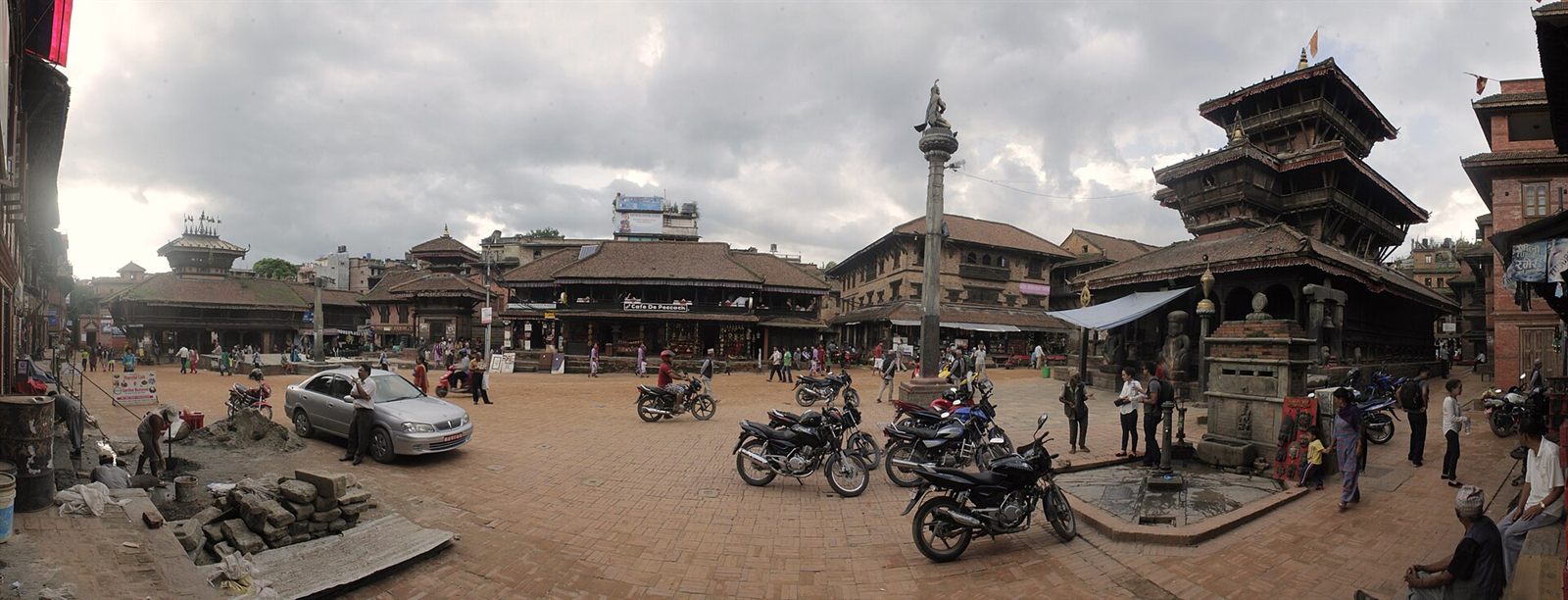
- Cover photo: Bhaktapur Durbar Square by Tanweer Morshed (CC BY-SA 4.0) via Wikimedia Commons.
