The Hazratbal Shrine Emblem Controversy: What Really Happened in Kashmir
A plaque with the Ashoka emblem inside Kashmir's Hazratbal Shrine was smashed in September 2025. Dozens were questioned, no PSA was used, the plaque never returned, and the shrine runs normally.
Updated October 14, 2026 - following the latest reporting on the Waqf Board’s Friday sermon proposal and the High Court’s April 2026 order quashing the PSA detention of MLA Mehraj Malik.
1 prayer. 1 plaque. 4 stone lions. That is all it took to shake Kashmir’s most loved shrine and drag in the police, the courts, chief ministers, and prime-time studios.
The story in 30 seconds
- A marble plaque with the Ashoka emblem was placed inside Hazratbal Shrine on September 3, 2025
- After Friday prayers on September 5, worshippers broke it with stones
- Police detained 26 people on September 6 from CCTV footage; local reports put total questioned at ~25-50; almost all released; no PSA on Hazratbal detainees; minors not charged
- The plaque was removed and never put back; the shrine runs normally
What is Hazratbal and why does it matter
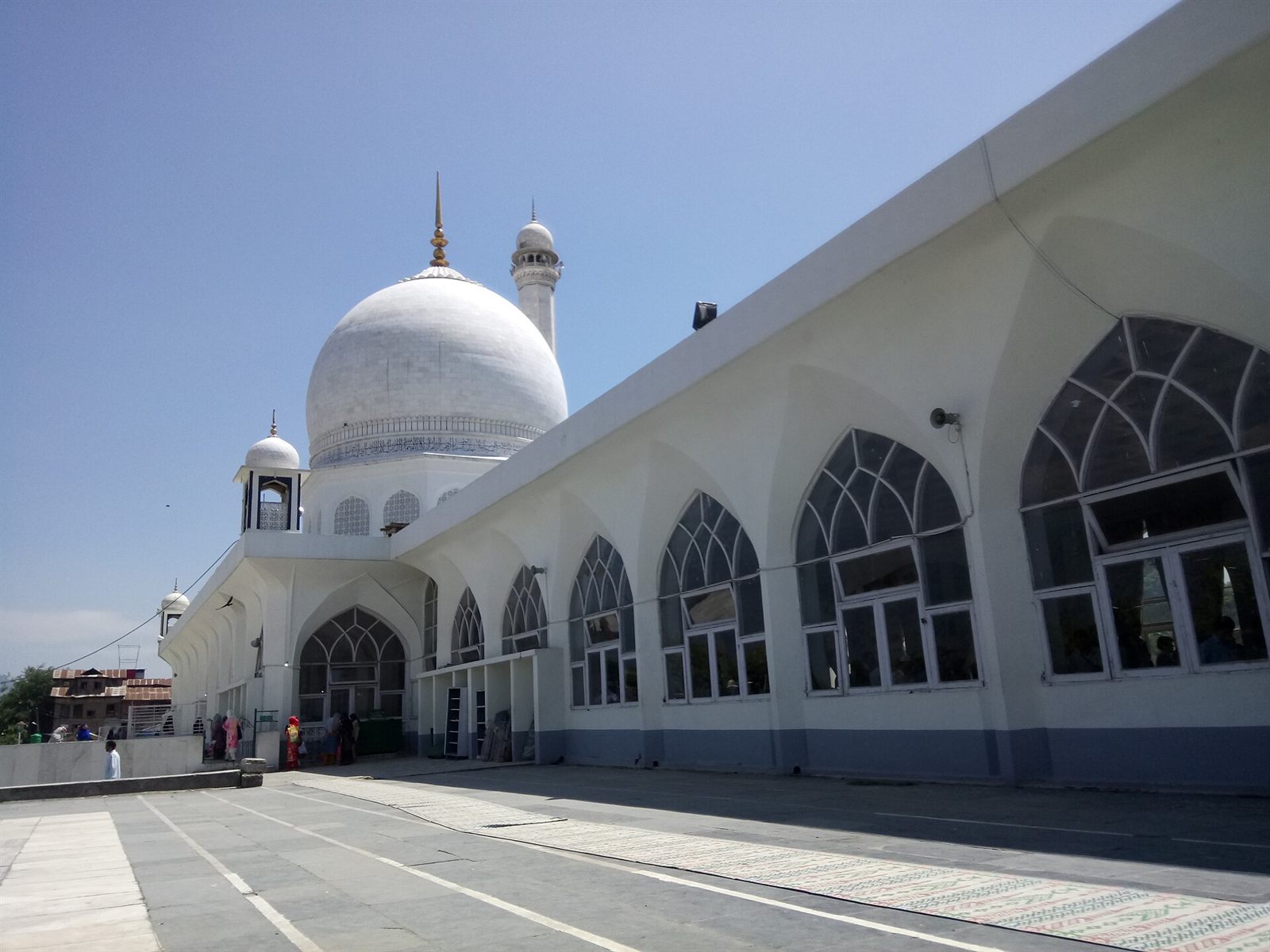
Hazratbal sits on the banks of Dal Lake in Srinagar. For Kashmiri Muslims, it is the most loved shrine. It keeps the Moi-e-Muqaddas, a relic believed to be a hair of Prophet Muhammad. Lakhs visit, especially on Fridays and on Eid-e-Milad.
On September 3, 2025, Waqf Board chairperson Dr. Darakhshan Andrabi opened a renovated prayer hall. The work was a year-long beautification phase. With it came a marble plaque naming the renovation. The plaque carried the Ashoka emblem with 4 lions.
The present marble structure dates to a rebuild that began in 1968 and finished in 1979 under Sheikh Mohammad Abdullah. The September 2025 work was a fresh beautification of that building - not the first repair since 1968 (that was corrected; see note below).
The Waqf Board said this was normal: the government paid for the work, so the government stone recorded it. Many worshippers and scholars did not accept this. They said a mosque is a place of prayer, and figures of living beings do not belong there. This idea comes from Tawheed, the belief in one God without images or idols.
What happened on September 5
Friday prayers had just ended when the shouting started. A group of worshippers closed in around the new plaque, slogans rose, and then stones flew. Within minutes the emblem lay chipped and broken. By evening the video was on every phone in the Valley.
The date made things more sensitive. The next day, September 6, was Eid-e-Milad in Kashmir, when Hazratbal sees its biggest crowd of the year for the relic display.
What the police did
Srinagar police filed a case at Nigeen Police Station under Bharatiya Nyaya Sanhita (disturbing a lawful religious assembly, breach of peace, rioting, damage to property, conspiracy) and under the Prevention of Insults to National Honour Act.
With CCTV footage, police detained 26 people on September 6. Some local reports put the wider total questioned at ~25-50. As reported by local press, adults who broke the plaque were questioned and minors were not charged.
Almost all were released after questioning. There was no mass trial.
The PSA debate
After the incident, Dr. Andrabi called the vandalism a terrorist attack. She asked for the Public Safety Act (PSA) against those involved. PSA allows jail without trial for a long period.
Many leaders and groups opposed this. They said PSA for breaking a stone was too harsh and would only anger people more. Chief Minister Omar Abdullah also spoke against it.
In the end, the government did not use PSA on the Hazratbal detainees. In a separate case, PSA was used against AAP MLA Mehraj Malik after a clash with the Doda administration over a health centre shift. The detention order was dated September 8, 2025, and Malik was lodged in Kathua jail. PDP chief Mehbooba Mufti said on September 10, 2025 that the move was meant to shift focus away from Hazratbal.
That separate PSA case did not survive. On April 27, 2026, Justice Mohammad Yousuf Wani of the High Court of Jammu and Kashmir and Ladakh quashed Malik’s PSA detention order. Malik was released from Kathua jail on April 28, 2026.
What the leaders said
Omar Abdullah said state emblems belong in government offices, not in mosques, temples, or gurdwaras. He asked why the stone was needed at all. He also recalled that Sheikh Abdullah gave Hazratbal its present shape without fixing his own nameplate there.
“What was the need for an emblem and the stone in the first place? Wasn’t the work already sufficient?” Chief Minister Omar Abdullah
NC MP Aga Ruhullah Mehdi asked for an apology and for Dr. Andrabi to be removed. He said the plaque went against both the norms for religious places and Tawheed. He also warned the government against using PSA threats on worshippers.
Mehbooba Mufti called the installation blasphemy. She said it hurt Muslim feelings. She asked for action against the Waqf leadership. She also said her stand was not against the emblem itself, but against placing figures in a shrine.
“Hazratbal is connected to our Prophet Muhammad and any sort of blasphemy is not acceptable to Muslims.” Former Chief Minister Mehbooba Mufti
The BJP and the Waqf Board condemned the breaking of the plaque. Union Minister Kiren Rijiju called Hazratbal a symbol of peace and appealed for calm. Lt. Governor Manoj Sinha said he was pained by the insult to a national symbol. The Waqf Board said the plaque was only a record of government-funded work and blamed opposition parties for provoking people.
“They are terrorists. They could not digest the achievement the Waqf made.” Waqf Board Chairperson Dr. Darakhshan Andrabi, speaking after the incident
Religious scholars, including the Muttahida Majlis-e-Ulema led by Mirwaiz Umar Farooq, said symbols and plaques have always been avoided inside mosques. They pointed out that even the 1970s rebuild placed no plaques or foundation stones out of respect for Shariah and tradition. They called the new plaque needless and provocative.
What each side said
| Who | Position on the plaque | Position on the police action | What actually happened |
|---|---|---|---|
| Omar Abdullah / Aga Ruhullah Mehdi | Emblem does not belong in a mosque | Against PSA; called for apology & Andrabi’s removal | PSA not used on Hazratbal detainees |
| Mehbooba Mufti | Called it blasphemy | Action against Waqf leadership, not protesters | PSA not used |
| BJP / Waqf Board | Called it a “terrorist attack” | Wanted PSA on worshippers | Malik’s PSA quashed in Apr. 2026 |
| Religious scholars (MMU) | Plaques avoided in mosques | Vandalism is a separate matter of law | - |
| Outcome | Plaque removed permanently | 26 questioned; minors not charged; no PSA | Shrine open; new sermon row began Oct. 2026 |
Why a small plaque caused such a big row
The anger was not only about 1 stone. Since 2019, the Waqf Board has taken many disputed steps. In August 2022 it barred mujavirs, the traditional caretakers, from collecting offerings given for prayers. Shrines were left with only official Waqf donation boxes. About a month later it banned the dastar bandi ceremony of honouring guests with a turban. In 2023 it moved to take direct control of many unregistered shrines, mosques, and khanqahs. Frontline magazine covered these events in detail on October 5, 2025.
The Board calls these steps reform. Many shrine committees and scholars call it excess control over religious life. The plaque row burst out in the middle of this old tussle.
In April 2024, it removed Hazratbal imam Kamal Ud Din Farooqui. The Board’s order dated April 8, 2024 relieved him pending inquiry after he presided over the recorded conversion of a Hindu man, Sandeep Kumar, which police said could disturb public harmony. Farooqui, appointed imam in 2016, said the conversion was voluntary and that the Board’s own administrator was present. On September 10, 2026, after more than 2 years out of the shrine, Farooqui petitioned the High Court of Jammu and Kashmir and Ladakh for reinstatement. On September 15 and 16, 2026, the court issued notices to the Waqf Board and the administration and asked them to consider his June 2024 representation.
Said plainly: no one in this story is clean
Strip away the slogans and this is what remains. Dr. Andrabi placed a foreseeable spark inside a prayer hall. Past rebuilds, including the 1970s work, placed no plaques or stones inside, so the variable was never marble or renovation. It was the lions. A nameplate outside the shrine would have recorded the same funds. She chose the stone inside, and the explosion that followed was predicted by everyone except the person who ordered it.
The worshippers who swung the stones had real anger and a bad method. Smashing the plaque broke the law, and worse, it handed every hostile camera the exact footage needed to paint ordinary Kashmiris as extremists. Faith defended by vandalism leaves faith looking weaker in public, not stronger.
Omar Abdullah and Mehbooba Mufti were right on principle. Emblems do not belong in shrines. But their outrage is selective, and selectivity has a political context. Principle does not wait for election season. Timing that convenient is politics wearing the clothes of piety.
The BJP’s “terrorist attack” label was the most dishonest line of all. No group claimed it. No plan existed. No weapon beyond stones. The police FIR itself stuck to rioting and related charges, which tells you what the professionals actually believed. Calling prayer-goers terrorists is language meant to criminalize a community, not to describe a crime.
1 adult decision survived this mess. No PSA on the Hazratbal detainees. Quick releases. Minors spared, as reported by local press. Plaque out. Shrine open. De-escalation worked where threats would have burned the Valley down.
The verdict stands on the record. A shrine is not a noticeboard. A broken stone is not a terror plot. And every party in this story burned someone else’s faith as fuel. The facts belong to none of them.
How it ended
The plaque was taken out soon after the incident. It was never put back.
The police case did not grow. No PSA was used on the Hazratbal detainees. As reported by local press, no case was filed against minors. Most people questioned were freed.
The shrine never closed. Daily prayers continued. Friday prayers continued. Chief Minister Omar Abdullah joined Maghrib prayers there on September 6, 2025 for Eid-e-Milad. On September 12, 2025, a large crowd gathered as usual.
Later work at the shrine continued without the emblem. On November 27, 2025, Dr. Andrabi inaugurated a new multipurpose Sheesh Khana at Hazratbal.
Where things stand now
The emblem matter is over. The debate has moved to other Waqf decisions. Dr. Andrabi remains chairperson of the Jammu and Kashmir Waqf Board, a post she has held since March 2022 for a 5-year term. On September 18, 2026, the Board took direct administrative control of the Dargah-e-Faiz Panah Mir Syed Taj-ud-Din Hamdani at Nowhatta in Srinagar.
In October 2026, the Board proposed 1 common Friday sermon topic for all mosques in Jammu and Kashmir, to be picked in advance by a committee of preachers. The proposal was shared by Executive Magistrate Ishtiyaq Mohi-ud-Din at a virtual meeting of preachers on October 12, 2026. The Board said the Khutba Rasool will not change, and topics will cover issues like drugs, welfare of women, and social behaviour. On October 10, 2026, Dr. Andrabi separately urged imams and khateebs to intensify the Board’s anti-drug campaign.
That proposal is now the new topic of debate. Chief Minister Omar Abdullah and PDP chief Mehbooba Mufti both slammed it on October 13, 2026 as interference in religious affairs. On October 13 and 14, 2026, Dr. Andrabi clarified that no order makes uniform sermons mandatory and that scholars remain free to decide topics, a position reported by Deccan Herald and Hindustan Times.
The core lesson of Hazratbal is simple. A shrine runs on trust. Any new step, even a stone, needs the trust of the people who pray there.
Sources
Tap to open the 8 sourcesTap to close
- The Hindu, Sept. 5-6, 2025 - mob vandalises national emblem at Hazratbal shrine; Omar Abdullah criticises emblem use.
- India Today, Sept. 6, 2025 - 26 detained after national emblem vandalised at Hazratbal shrine.
- Frontline, Oct. 5, 2025 - Faith under watch: Kashmir’s Waqf Board centralised shrine management.
- The Hindu, Oct. 13, 2026 - J&K Waqf Board pushes for uniform Friday sermons.
- Deccan Herald / Hindustan Times, Oct. 13-14, 2026 - Andrabi clarification on sermon proposal.
- The Hindu / TOI / HT, Apr. 28, 2026 - Malik’s PSA quashed by High Court; released Apr. 28, 2026.
- HT / UNI, Sept. 2026 - Farooqui’s High Court petition and court notices.
- Cover photo: Hazratbal Shrine, Srinagar by Paul Zahid (CC BY-SA 4.0) via Wikimedia Commons.
